
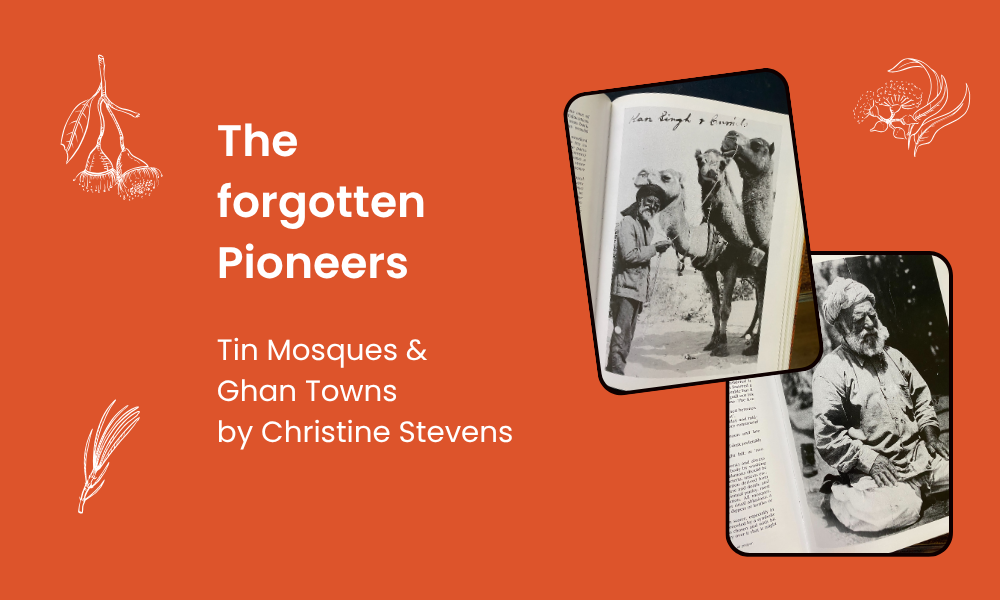
Long before the Ghan railway cut through the red heart of Australia, a different kind of transport shaped the interior — the camel. And behind those camel trains were the men who drove them: the Muslim cameleers, a community whose contribution to Australian history has been quietly overlooked for over a century.
Who Were the Cameleers?
From the 1860s through to the early 20th century, thousands of cameleers — predominantly Muslim men but also a small proportion of Sikh and Hindu men, arrived in Australia, from Afghanistan, Pakistan and India, to do work that horses and bullocks simply couldn't. The arid interior was their domain. They carried supplies to remote stations, transported wool to coastal ports, and opened up trade routes that made settlement of the outback possible.
Without them, the construction of the Overland Telegraph Line, the exploration of the interior, and the survival of remote communities would have looked very different.
Wherever the cameleers settled, they built community. They established Ghantowns — informal settlements on the edges of outback towns — and constructed small tin mosques so they could practise their faith far from home. These modest structures, often built from corrugated iron, became quiet landmarks across South Australia, Queensland, and the Northern Territory.
Many of these mosques still stand today. The oldest surviving mosque in Australia — the Maree Mosque in South Australia (built around 1861) — is a direct legacy of this community.
Tin Mosques and Ghantowns by Christine Stevens is one of the few books to document this 130-year chapter of Australian history in depth. With over 100 rare photographs, it brings to life the faces, places, and stories of a community that shaped the nation's interior but rarely appears in mainstream history books.
Why This Story Matters
Australia's multicultural identity didn't begin with post-war migration. The cameleers were among the country's earliest Muslim communities, and their legacy is woven into the landscape — in place names, in the route of the Ghan railway, and in the tin mosques that still dot the outback.
Reading Tin Mosques and Ghantowns is a reminder that Australian history is richer, more diverse, and more surprising than the standard narrative suggests.
Get Your Copy
Tin Mosques and Ghantowns by Christine Stevens is available now at Red Kangaroo Books. A must-read for anyone passionate about Australian history, multicultural heritage, or the untold stories of the outback.
👉