


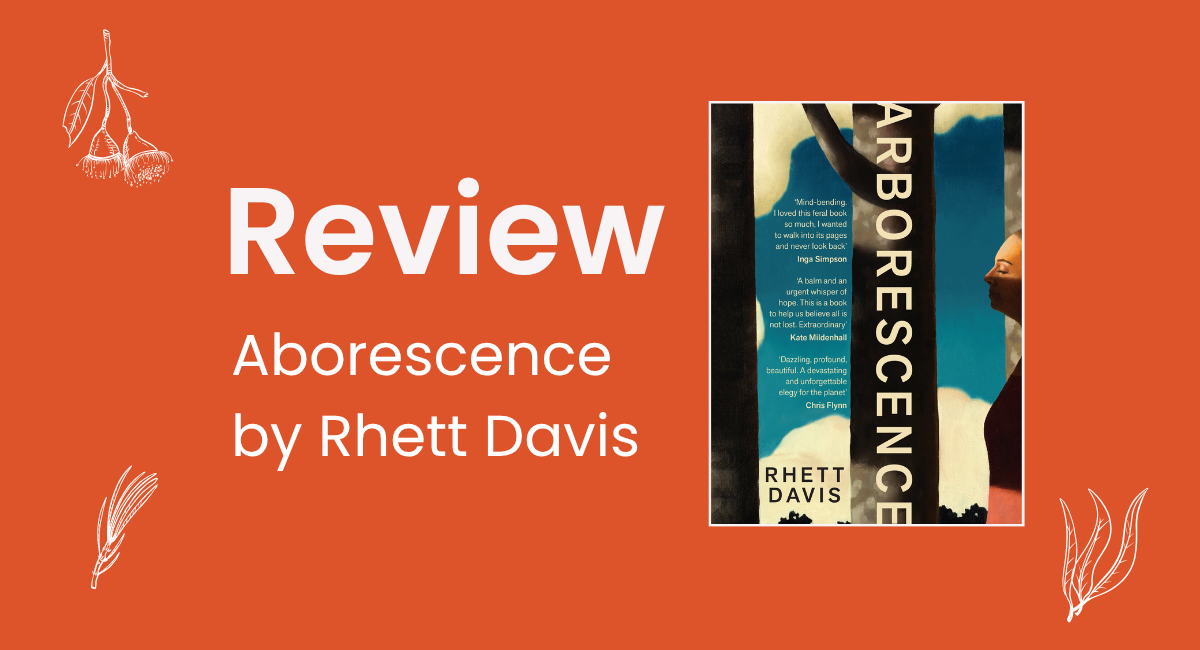
Arborescence by Rhett Davis (Hachette, 2025)
Bren and his partner Caelyn are treading water in their lives in Melbourne until one day they hear of people in a nearby forest who believe that, if they stand still for long enough, they will become rooted to the ground and transformed into trees. After a visit to this strange community Caelyn returns to university to study the phenomenon of transformation. Here she is met with resistance from the scientific establishment but, as the outlandish global pandemic advances and more people take root, she becomes a global expert on arborescence – the term she coins for the process.
What makes a person want to be a tree? Caelyn suspects that the motive is a desire to re-establish balance between humanity and nature, that arborescence is a meditative if extreme act of switching off in the face of environmental degradation. She becomes convinced that arborescence will save the planet from human destruction – but Bren isn't so sure. Although he assists Caelyn in her advocacy, his good-natured support eventually evaporates and their love falters.
Arborescence adds to a growing field of post-apocalyptic literature. Davis tells his story well in easy, pleasant prose, bringing the reader gently along into this weird world. His groundwork grows into a meditation on environment, human autonomy and personal issues of family loss and grief. And it would spoil things to do more than mention that the resolution at the close of the story is beautifully handled.
Arborescence is fine speculative fiction, an end-of-world story offering green shoots of hope.
Steve Morton:
Steve’s recent books are Australian Deserts: Ecology and Landscapes and Desert Lake: Art, Science and Stories from Paruku.